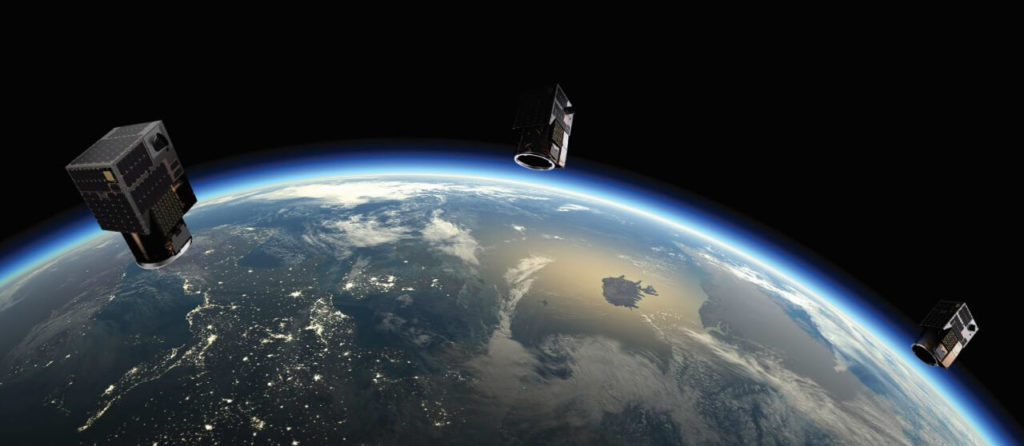
The Time for Persistent Global Intelligence is Now: Why Sovereign Sensing is Critical
By The Satellogic Team
A conversation between Satellogic CEO Emiliano Kargieman (EK) and Vice Admiral (ret.) Frank "Trey" Whitworth III (TW), 8th Director of the National Geospatial-Intelligence Agency and Strategic Advisor to Satellogic.
When VADM Whitworth joined Satellogic’s advisory ranks earlier this year, we agreed on something simple: we’d talk often, on the record, about what’s actually changing in how nations see the world. This is the first of those conversations, lightly edited from a longer dialogue.
The world of tomorrow is not going to look like the past.
- EK: The biggest misconception in power right now is the belief that the future will look like the past. The pace of technological change (including what we saw with the Anthropic model withdrawal in mid-June) means business-as-usual procurement and strategic-investment cycles aren’t going to keep up. Governments are starting to understand that. They’re just not moving fast enough yet.
- TW: I’d add, I rarely comment on what we’re getting wrong. But I will say what keeps me up. It isn’t the adversary I can see. It’s the behavior I’m missing. The world is too big, and we’ve barely cracked the top of the iceberg on sensing. The belief that we have ubiquity, that we have a complete view, is itself a vulnerability.
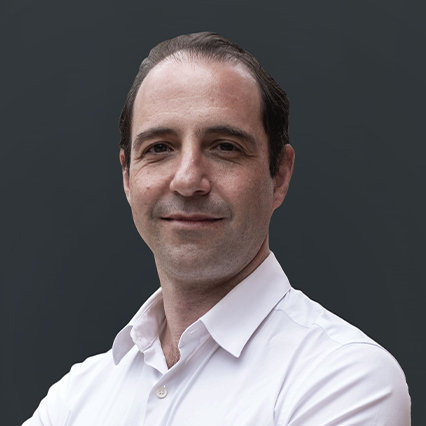
Emiliano Kargieman
CEO & Founder
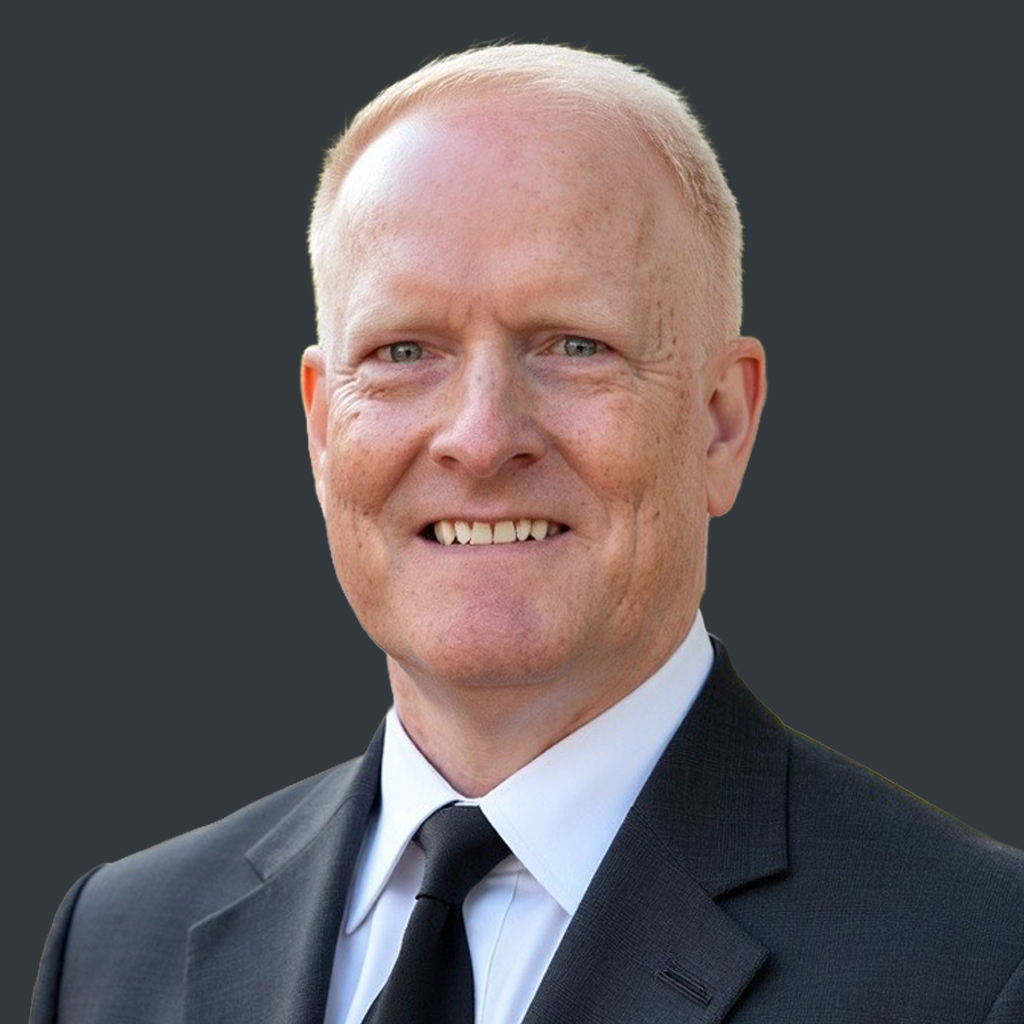
Vice Admiral (ret.) Frank “Trey” Whitworth III
8th Director of the National Geospatial-Intelligence Agency and Strategic Advisor to Satellogic
The “reluctant” revolution in military affairs.
- TW: We are in a revolution in military affairs that nobody asked for. I’ve written about this academically. Call it non-proximate warfare: violence at distance, with sensing as the coin of the realm. If you’re going to authorize force, or prevent it, you need understanding. And understanding starts with knowing where to look. The world is too big to luck into the right answer.
Sovereignty doesn’t mean going it alone.
- EK: Recent high-profile episodes when global services were suddenly inaccessible make the need for sovereign capability clear. They are a wake-up call for any nation that has outsourced a critical capability. And governments are quickly realizing that, in their moment of need, they need a fallback that they control.
- TW: And what’s striking is that the countries waking up to this aren’t just great powers. Five years ago, sovereign space-based intelligence wasn’t even on the dream-list for most nations. Today it is. Provided those nations operate from sound values, that’s a healthy development. It’s an awakening. And, enhanced sovereignty can actually produce better alliances. This is positive global burden-sharing. The U.S. has historically carried a disproportionate load. If responsible nations can contribute their own collection capacity, the entire coalition gets stronger. It’s not zero-sum.
- EK: Governments are building sovereign capability because they need mission assurance. They can’t take a risk on something that can be revoked, throttled, or repriced. Having a diversified and distributed architecture (sovereign assets, allied sharing, commercial capacity) offers more resiliency than any single source. Moving from a small number of exquisite assets to a large, proliferated network gives you frequency, redundancy, and the ability to absorb a disruption without losing the picture.
The volume problem, and what AI actually solves.
- TW: More sensing can create a nightmare for the analyst. AI isn’t a luxury here, it’s a way to ensure you don’t drown the people you’re trying to help. Where I’d offer cautions in the AI conversation – keep an eye on confidence. As computer vision becomes more central, adversaries will try to poison it. Corroboration becomes more important, not less. I’d argue we may need a new explicit step in the intelligence cycle — validate or confirm — to formalize how we account for that.
- EK: That’s a real architectural shift. The classical cycle is collect, exploit, disseminate. What we’re heading toward is monitor, detect, cue, confirm, explain, and then back around. The volume of data has gone up by orders of magnitude and the decision window hasn’t changed. We still need to deliver actionable results with speed and confidence.
What persistent global sensing actually delivers.
- TW: For example, famine. It may not be the top priority for every country, but for some it is. And food insecurity extends to larger issues. People move and borders strain. What starts out as an issue with food supply becomes a security and immigration problem. Persistent sensing gives a nation the ability to get ahead of that on its own terms.
- EK: Maritime monitoring is another. Piracy. Hypersonic-weapon tracking. These are problems where detection-to-reaction time is the entire game. And then there’s the value of the archive itself, what Trey calls “eureka moments.” The image you collect today may not become valuable for ten years. Persistent collection unlocks your ability to find the unknown unknowns over time.
Ten years out: sensing fades into the background.
- EK: My goal for what we’re building is that, ten years from now, this infrastructure fuses into the background the way GPS has. You use it every day and you don’t think about the satellites. It feeds digital twins of the planet (water, food, energy, climate, migration) that let decision-makers project outcomes and test alternatives. The big problems that motivated me to start the company 15 years ago are more pressing now. We need a window into the future to make better decisions.
- TW: And we keep values at the core. Ubiquity with a shared values layer is preparedness. It’s the ability to help during a wildfire or an earthquake, to prevent a famine, or to stabilize a region before it destabilizes.
The closing ask.
- TW: To every decision-maker building this network: stay insatiable, provided values stay at the core. Don’t be held back by anything else. The economic and personnel realities are real, but the vision is worth the work.
- EK: Collaboration and shared infrastructure are also the world’s checks and balances. The systems we build to see the world should also be the systems that keep us honest about what we see.
Vice Admiral (ret.) Frank “Trey” Whitworth III served as the 8th Director of the National Geospatial-Intelligence Agency from June 2022 to November 2025. He is a Strategic Advisor to Satellogic.
Emiliano Kargieman is the founder and CEO of Satellogic.